Focusing on reducing trauma and improving how courts, child welfare, and child-serving organizations work together to support young children in, or at-risk of entering, the child welfare system.
THE CHALLENGE
In Washington State, young children are over represented in the child welfare systems and face unique vulnerabilities that require specialized, trauma-informed approaches to protect their development and strengthen families.
THE SOLUTION
The Safe Babies / ECC Approach
Early Childhood Courts (ECC) are specialized therapeutic court programs in Washington State designed to assist families with young children, ages 0-5, who are navigating the child welfare court system. Utilizing the Safe Babies™ approach, these courts focus on reducing trauma and improving how courts, child welfare, and child-serving organizations work together to support families with young children in, or at-risk of entering, the child welfare system.
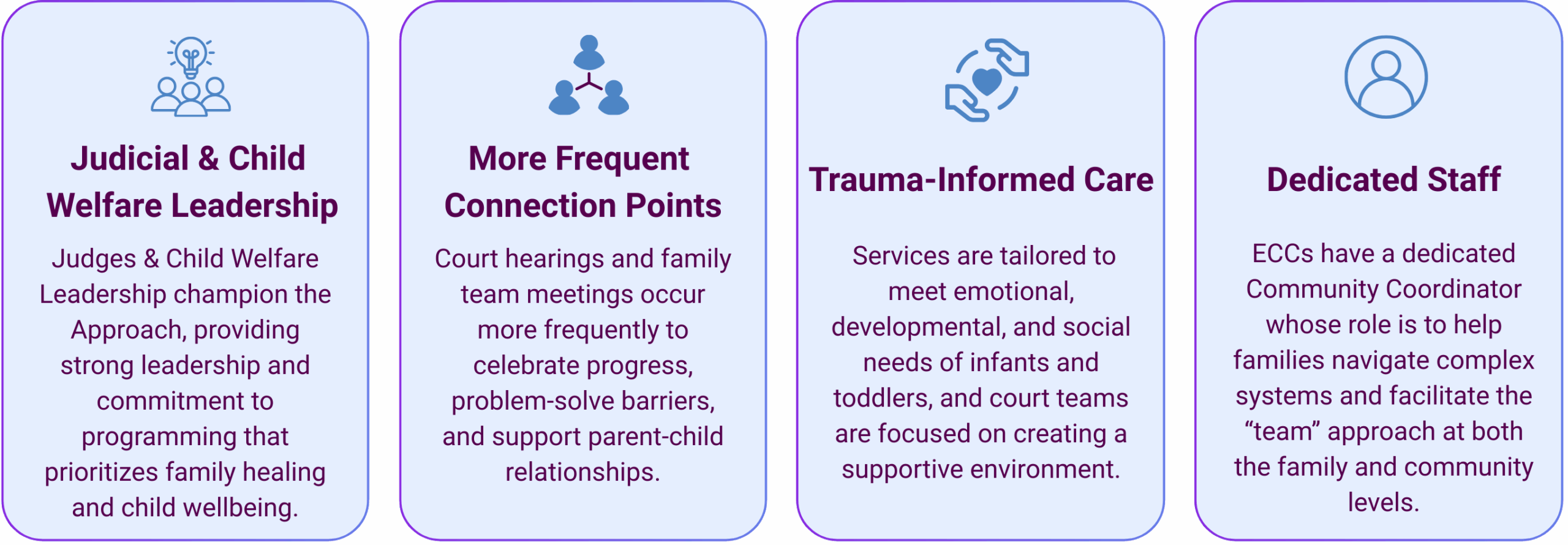
Core Strategies
Early Evidence of ECC Effectiveness
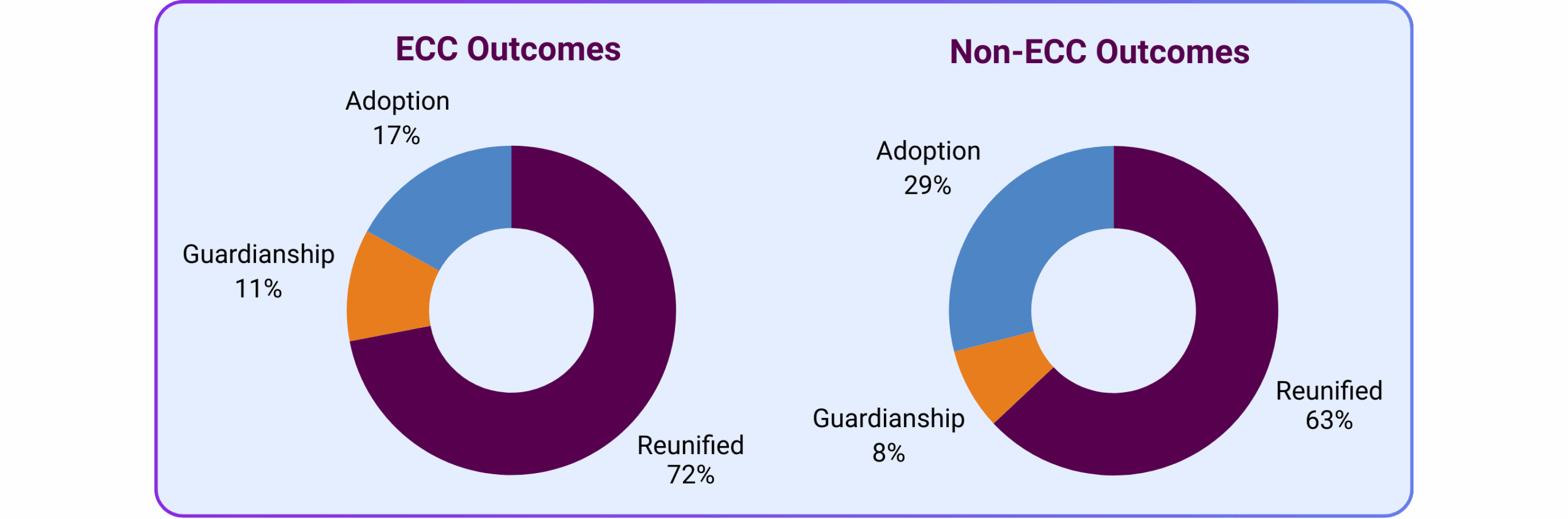
When compared to non-ECC Dependency cases, ECC permanency outcomes show higher rates of reunification and guardianship, and lower rates of adoption – meaning children involved in ECCs are more likely to reunify with their parents or stay connected to their family.
CONNECT
ECC Sites & Referrals
ECCs currently operate in Clark, Kitsap, Pierce, Spokane, and Thurston counties, with emerging sites in Lummi Nation’s Child Welfare program and Makah Tribal Court.